Last Updated: November 15, 2026
Quick Summary
A thermal imaging inspection cost breakdown separates site time, equipment use, report production and travel, because pricing is rarely a single line item. Each component moves independently, so two quotes at the same headline figure can cover one wall or an entire envelope. Knowing the components helps you negotiate better and avoid surprises.
- Quotes are commonly structured around four scopes, from a single-issue scan to a commercial multi-asset scan.
- A quote naming thermal imaging without stating scan points or areas covered is not comparable.
- Confirm whether the fee is fixed or a base fee plus an hourly rate after the first hour.
- Thermal imaging cannot confirm the extent of termite damage or assess structural soundness.
- Resicert reports include 50 to 100 photos and are written in plain language.
Table of Contents
- Why a Thermal Imaging Inspection Cost Breakdown Matters
- What Does a Thermal Imaging Inspection Include?
- How Long Does a Thermal Imaging Inspection Take?
- The Thermal Imaging Inspection Report: What You Get Back
- Thermal Imaging Inspection Limitations and What It Cannot See
- How to Compare Thermal Imaging Quotes Like-for-Like
- Request a Quote and Confirm What Is Covered
- Frequently Asked Questions
Why a Thermal Imaging Inspection Cost Breakdown Matters
A thermal imaging inspection cost breakdown matters because it separates what you are actually paying for from what a quote merely promises. The pattern is consistent: buyers who understand the components of a quote negotiate better and get fewer surprises. Thermal imaging inspection pricing is rarely a single line item.
That matters most when you are stretched on a deposit. A cheap quote that skips the scan, or scans one wall and calls it done, is not a saving. It is a risk transfer you did not agree to.
Below, we break down what drives the total, how long the work takes, and how to compare quotes without being fooled by a low headline figure.
What Does a Thermal Imaging Inspection Include?
A thermal imaging inspection includes an infrared scan of the building envelope, electrical equipment and wet areas, combined with a standard visual building inspection. What Thermal Imaging Detects: A Home Inspector’s Guide explains exactly what the scan can detect. An infrared camera reads surface temperature differences and shows them as a heat map, which helps an inspector spot moisture, poor insulation and overheating circuits that a visual walk-through can miss.
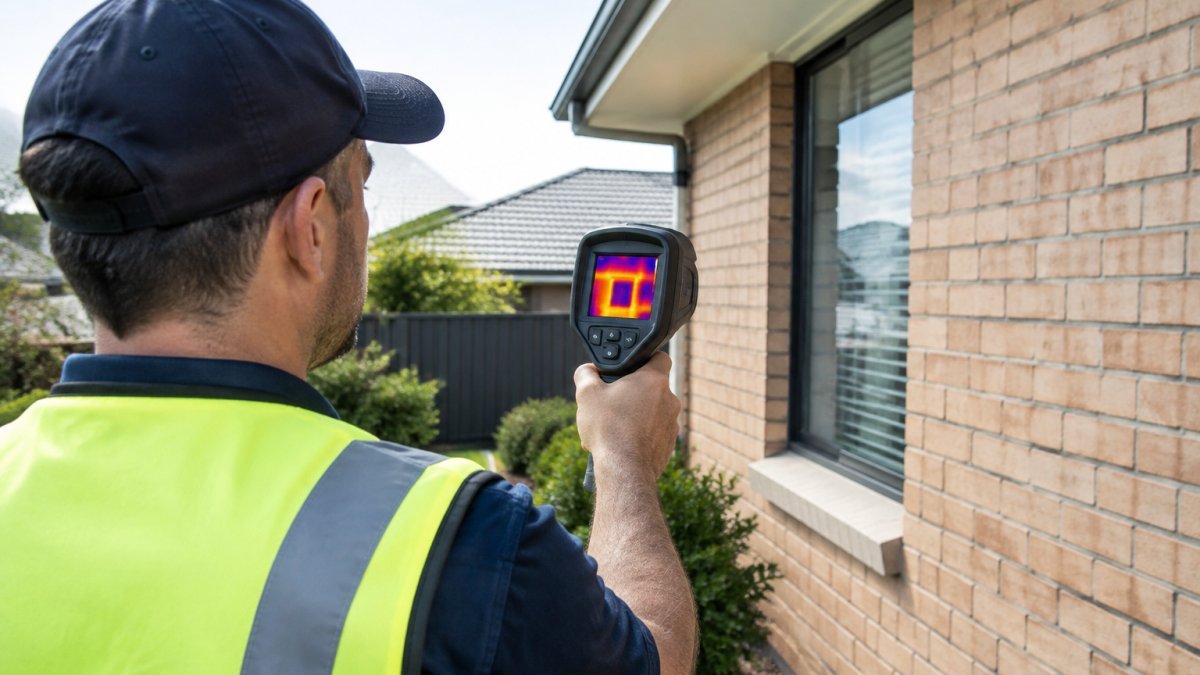
Electrical, moisture and plumbing scans
The scan itself is only as good as what the inspector points it at. A single visit can involve three distinct jobs.
- Electrical scanning: switchboards, circuit breakers and equipment under load. Loose connections and overloaded circuits can show as hot spots.
- Moisture and damp: ceilings, shower recesses, around windows and under flooring. Damp areas can show a different temperature signature from dry materials.
- Plumbing: hot water pipes and supply lines can often be traced through walls and slabs without cutting anything open.
What most guides miss is that the scan is only meaningful when conditions allow it. A camera cannot read a wall that has been in direct sun all afternoon, and it cannot see through a bookshelf. Safe access to the area is part of the cost.
How scope drives the fee by inspection type
A like-for-like cost comparison only works if you know which of these jobs you are actually buying, because each carries a different time and equipment burden. Quotes are commonly structured around a number of scopes, and the fee can depend on the number of scan points rather than the headline label.
- Single-issue scan (one area): typically one wall, one ceiling section or one shower recess. This is the shortest visit and the lowest fee, but it is also the scope most often quietly substituted for a full scan in a cheap quote.
- Residential envelope scan: the full external and internal envelope plus wet areas. This is the standard residential scope and the one most buyers assume they are getting.
- Electrical switchboard and equipment scan: can be priced by the number of boards and circuits under load.
- Commercial or multi-asset scan: can be priced on floor area and asset count together.
A common pattern is for a quote to name the scan but not the scope, so two quotes at the same figure can cover one wall or an entire envelope. Ask which of the four scopes above your quote maps to before you compare the number.
Watch out: a quote that lists “thermal imaging” without stating the number of scan points or the areas covered is not comparable to one that does, even if the totals look similar.
How Long Does a Thermal Imaging Inspection Take?
The length of a thermal imaging inspection depends on property size, access and how many areas need scanning. Setup, safe access and confirming findings can take a meaningful part of the visit.
Larger homes, multiple levels, or commercial premises push the time up. So does anything that blocks the camera’s line of sight. If you are working to a tight offer deadline, ask the inspector directly what turnaround they can commit to for your property type, and get it in writing. Resicert delivers reports within 24 hours.
The Thermal Imaging Inspection Report: What You Get Back
A thermal imaging inspection report can include infrared images, the inspector’s interpretation of each anomaly, and a plain-language summary of what needs attention. The images matter, but the interpretation matters more. A red patch on a wall means nothing without an inspector explaining whether it is a plumbing leak, missing insulation or a reflection.
Reports vary widely in quality. Some are a photo dump with no narrative. Others are clear enough to hand to a tradesperson for a quote. Ask to see a sample report before you book, and read it the way you would read a contract, because that is what it becomes during negotiation.
How to read a building inspection report guidance is worth reviewing before you compare anything, since a report you cannot interpret is a report you cannot act on.
What the report delivers, and what it does not
Most guides stop at “you get images and a summary”. The more useful question is what the fee actually buys once the report lands, because the inclusions vary more than the price does.
A well-scoped report can deliver:
- Infrared images with visual photographs of the same locations.
- Written interpretation of findings.
- A plain-language summary.
Points to confirm before paying for any report:
- Remedial cost estimates. Confirm whether repair pricing is included.
- A guarantee that every defect is found. Thermal imaging reads surface temperature, so findings depend on the conditions at the time of the scan.
- Reinspection after repairs. Ask whether a follow-up visit is included or charged separately.
- Scope beyond the agreed areas. A report covers the areas agreed, not necessarily the whole property.
How report scope changes the fee
Report production takes time. A report with more images and written interpretation takes longer to produce than a short summary. When you compare two fees, check whether both include the same image count, the same written interpretation and the same turnaround commitment. How to Understand Combined Building and Pest Inspection Costs explains how inspection costs are typically structured. A quote that is cheaper because the report is thinner is not a like-for-like saving.
Watch out: a report that lists anomalies without stating the conditions of the scan or the areas not covered gives you findings you cannot rely on during a negotiation, however polished the images look.
Thermal Imaging Inspection Limitations and What It Cannot See
Thermal imaging inspection limitations are real and worth understanding before you pay. An infrared camera measures surface temperature, not what is inside a wall. It cannot confirm the extent of termite damage, cannot assess structural soundness, and cannot see behind furniture, stored goods or sealed cavities.
Conditions also affect accuracy. Wind, rain, direct sunlight and recent heating or cooling all shift surface temperatures and can mask or mimic a problem. A competent inspector accounts for this by scanning at the right time of day and cross-checking with moisture meters.
The honest position is that thermal imaging is one tool inside a building inspection, not a replacement for it. Treat any quote that sells the scan as a complete answer with suspicion.
How to Compare Thermal Imaging Quotes Like-for-Like
Comparing thermal imaging quotes like-for-like comes down to checking five things: what is scanned, how long is spent on site, whether travel and call-out fees are included, what the report contains, and who is doing the work. Two quotes at the same headline figure can deliver very different amounts of inspection. How to Choose a Building Inspector in Canberra sets out criteria for choosing the right inspector.
Use this checklist before you accept anything:
- Is the fee fixed, or is there a base fee plus an hourly rate after the first hour on site?
- Is a call-out fee, minimum charge or travel cost added on top?
- Does the price cover the thermal scan, or is it an optional extra?
- How many areas are scanned, and is the scope capped by property size?
- Is the report included, and does it include infrared images with written interpretation?
- Is the inspector licensed and insured, and what equipment do they use?
- For commercial premises, is the quote based on floor area and equipment count?
Watch out: the most common mistake is accepting a low quote that quietly excludes the scan or caps the report. You discover the gap after settlement, when it is your problem to fund.
Choosing a building inspector sets out the credentials to verify, and how inspection costs are structured explains why quotes differ so much for the same property.
Check these five points against every quote before you compare the headline figure.
| What to check | Why it matters |
|---|---|
| What is scanned | Scope can range from one wall to a full envelope |
| Time spent on site | Setup and safe access take a meaningful part of the visit |
| Travel and call-out fees | May be added on top of the headline price |
| Report contents | Image count and written interpretation vary widely |
| Who is doing the work | Confirm the inspector is licensed and insured |
Request a Quote and Confirm What Is Covered
The final step is confirming, in writing, exactly what your quote covers before you pay a deposit. Ask for the scope, the inclusions, the report turnaround and any additional charges in the quote itself, not in a phone call.
At Resicert, we offer a price match guarantee for comparable competitors, and provide a fresh independent assessment rather than relying on a vendor’s report. Our reports include 50 to 100 photos and are written in plain language. For current prices, request a quote from Resicert.
A quote you cannot decode is a risk you are carrying blind. Get a clear scope, a fixed price and a report you can actually use. Get started with Resicert and book an independent thermal imaging inspection with a quote that tells you exactly what is covered.
Frequently Asked Questions
How much does a thermal imaging inspection cost?
Pricing depends on property size, inspection scope, travel and whether thermal scanning is bundled with a building and pest inspection. Pricing depends on the property and the inspection scope, so a written quote is the reliable way to get a figure for your property. Ask for a written quote that itemises the base fee, any call-out charge, GST and what the thermal scan adds. Request a quote from Resicert for a figure matched to your property.
What factors affect the cost of a thermal imaging inspection?
The main cost drivers are floor area and number of levels, the type of scan (electrical switchboard, moisture and leak detection, or a full thermal survey), access and safe entry to roof spaces and subfloors, travel distance, and whether a written report with radiometric images is included. Commercial inspections with multiple switchboards and equipment generally take longer.
Is thermal imaging included in a building and pest inspection?
Not always. Many standard building and pest inspections rely on visual checks and moisture meters only. Resicert uses moisture testing and thermal imaging as part of its inspection process. Confirm in writing whether thermal scanning is included or an add-on before you compare quotes, because a cheaper headline price may exclude it entirely.
Can thermal imaging detect leaks behind walls?
It can flag temperature differences that suggest moisture behind walls, ceilings or floors, such as a hidden leak, damp patch or hot water pipe. It does not confirm the cause on its own. A thermal scan is often paired with a moisture meter to verify a reading. That combination is what makes the findings useful for negotiation or repair planning, rather than a colourful image with no diagnosis.
